REVIEW · NEW DELHI
6-Day Private Golden Triangle Tour – Explore Delhi, Agra & Jaipur
Book on Viator →Operated by Crystal India Holidays · Bookable on Viator
Mughal monuments, fast drives, real comfort. This 6-day private Golden Triangle strings together Delhi, Agra, and Jaipur with private guides and point-to-point transport, so you spend less time figuring things out and more time seeing key sights. I also like that the vehicle matches your group size, which keeps the trip calmer when you’re moving between cities.
Two things I especially like are the private, guided sightseeing in each city and the practical extras that reduce headaches, like bottled water in the car and a traditional rickshaw ride in Old Delhi. The other big plus is how the plan works even when traffic gets heavy, which is exactly the kind of issue that can derail a tight itinerary.
One drawback to plan for: monument entrance fees are not included (listed as ₹6,000 per person), so your final daily budget will depend on how much you add beyond the core sights. Also, some stops are exterior views, not full museum-style entries.
In This Review
- Key things you’ll notice on this tour
- The Value Pitch: why this Golden Triangle feels more “yours”
- Price reality check
- Day 1 in Delhi: pickup, check-in, and a flexible first evening
- Day 2 in Delhi: Old Delhi heat, Mughal landmarks, and a calm Sikh pause
- Jama Masjid: a monumental view experience
- Old Delhi rickshaw ride through Chandni Chowk
- Khari Baoli spice market: senses turned up
- UNESCO-era Mughal monument, viewed from outside
- Agrasen Ki Baoli (stepwell): the pause you didn’t know you needed
- Gurudwara Bangla Sahib: peaceful reset (and langar)
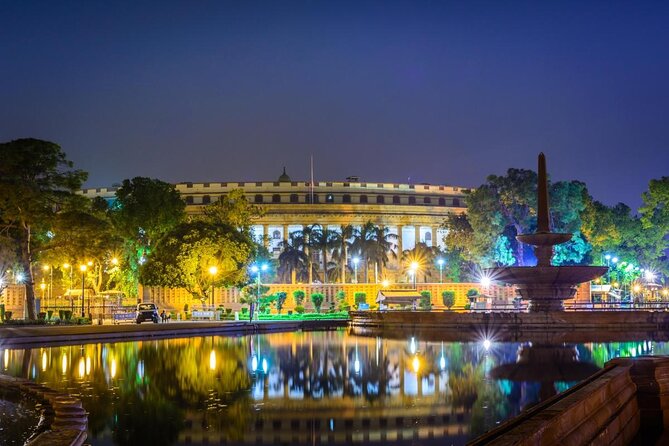
- India Gate and the British-era government building exterior
- Humayun’s Tomb and Gandhi Smriti
- Lotus Temple and Qutub Minar to wrap Delhi
- The Agra travel day: Yamuna Expressway and the Taj lead-in
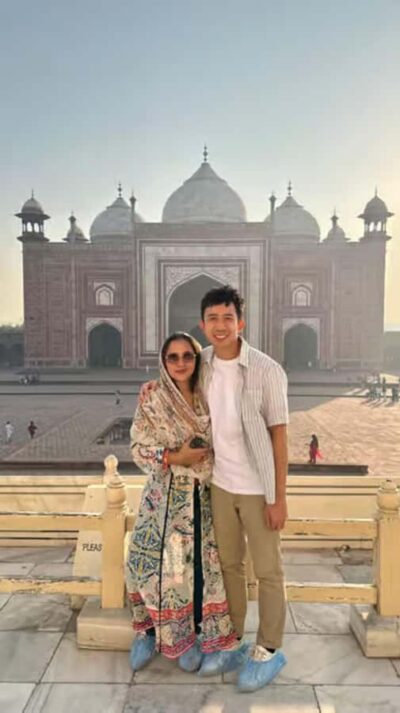
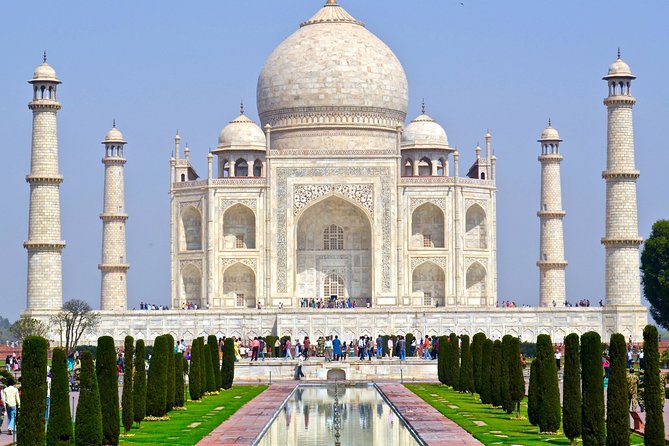
- Taj Mahal view point at sunset
- Itmad-ud-Daula, aka Baby Taj
- Day 4 at the Taj Mahal and Agra Fort: timing, then variety
- Taj Mahal with first rays of sunlight
- Agra Fort: Mughal power in sandstone and marble
- On to Jaipur after Agra
- Day 5 in Jaipur: forts, stepwells, and a science stop
- Amber Palace and the Sheesh Mahal
- Panna Meena ka Kund stepwell
- Jal Mahal photo stop
- Gaitore Ki Chhatriyan cremation grounds
- City Palace: still tied to the royal family
- Jantar Mantar: the UNESCO observatory angle
- Hawa Mahal exterior: the Palace of Wind
- Day 6: return to Delhi with an easy wrap-up
- What you’ll miss (and what you can adjust)
- Who this private Golden Triangle fits best
- Should you book this 6-day Golden Triangle tour?
- FAQ
- How does pickup work for this tour?
- Is this tour fully private or shared with other groups?
- What cities does the 6-day Golden Triangle cover?
- Are hotel stays included?
- What about entrances to monuments and sights?
- Do I get transportation between cities?
- Are any special transport options included for the Taj area?
- Is food included on the tour?
- Can I cancel for free?
Key things you’ll notice on this tour
- Private guide + private vehicle in each city, so you’re not stuck in shared-group timing
- Group-appropriate vehicle (sedan/MPV/van) for comfort across different party sizes
- Old Delhi texture with a rickshaw ride through Chandni Chowk lanes
- Taj planning with a battery bus to and from the parking area
- Hotels with daily breakfast in 4- or 5-star categories (when you book the hotel option)
- Traffic-aware day flow, designed to help you still hit multiple sights
The Value Pitch: why this Golden Triangle feels more “yours”
A Golden Triangle tour can go two ways: a checklist sprint, or a smoother ride where you can actually enjoy the places. This one leans toward the second option.
First, you’re paying for the structure: private pickup, city-to-city transfers, hotel nights, and guided sightseeing. That matters because Delhi, Agra, and Jaipur don’t just have traffic; they have location complexity. Getting from one highlight to the next is where many DIY plans get messy. Here, you’re not doing the math on routes or timing; a driver and local guide handle the movement.
Second, you get practical comfort touches that add up over 6 days. The car is air-conditioned, you get bottled mineral water during transfers, and the vehicle size is matched to your group size (four-seater sedan, six-seater MPV, or a ten-seater van depending on how many of you are traveling). If you’ve ever done India travel with a vehicle that’s too tight for your luggage and legs, you’ll feel the difference.
You can also read our reviews of more private tours in New Delhi

Price reality check
The tour price is $236.70 per person, but entrance fees are extra (₹6,000 per person listed). So I think of this as: you’re buying the private logistics and guide-driven sightseeing, while the monuments’ ticket prices are your on-the-ground add-on. In return, the tour lists several items that are included—like hotel taxes, bottled water, the Old Delhi rickshaw ride, and the battery-powered bus to the Taj area—which helps explain why this doesn’t feel like a bare-bones package.
Day 1 in Delhi: pickup, check-in, and a flexible first evening
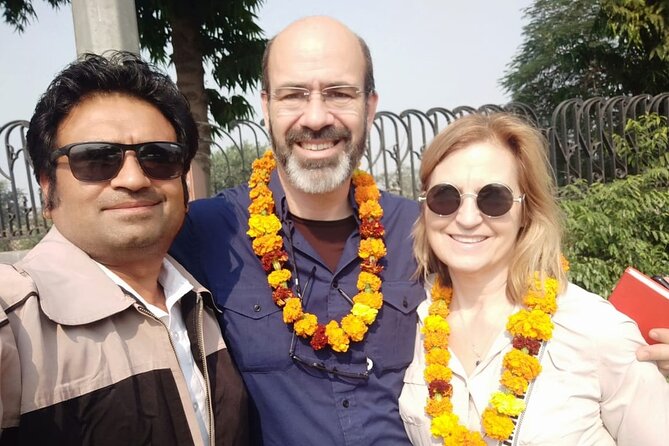
On arrival day, the tour starts with pickup from your chosen location in Delhi, Noida, or Gurugram—airport, railway station, hotel, or wherever you specify. After the transfer to your hotel and check-in, the rest of the day is yours. That first buffer is smart. Delhi days can be long, especially if you’re flying in or catching an early train.
What you’ll get:
- Hotel transfer included
- Leisure time to rest or do nearby exploring
Practical tip: use this free time for a gentle reset. If you’re jet-lagged, you’ll thank yourself later for keeping your energy for monuments the next day.
Day 2 in Delhi: Old Delhi heat, Mughal landmarks, and a calm Sikh pause
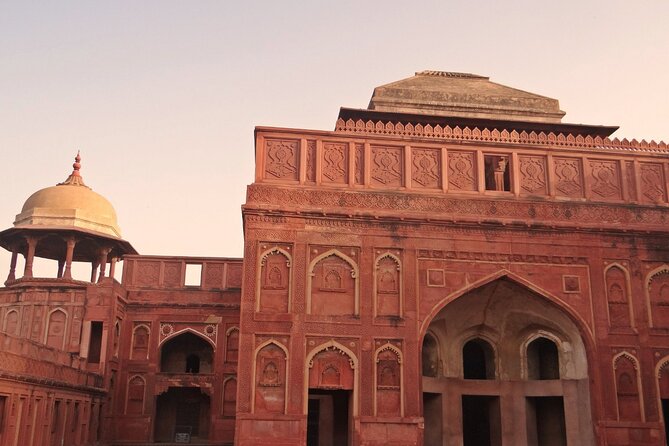
Day 2 is the big city-sights day. The route is heavy on the iconic sights, but it’s also built around variety: Mughal architecture, market energy, and then a serene spiritual stop.
Jama Masjid: a monumental view experience
You start at Jama Masjid, one of the largest mosques in India. Built in 1656 by Mughal emperor Shah Jahan, it’s both historically important and visually dramatic, especially from its minarets. Entrance isn’t included here, so you’ll want to budget for the monument fee.
Why it’s worth your time: big architecture like this can feel abstract until you see how scale works in person. It’s also a good anchor point for understanding how Delhi evolved.
You can also read our reviews of more tours and experiences in New Delhi






Old Delhi rickshaw ride through Chandni Chowk
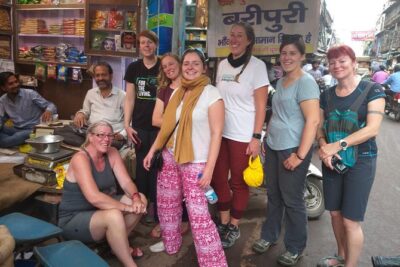
Then you get the Old Delhi rickshaw ride through Chandni Chowk, the narrow lane market scene that’s been alive since the 17th century. The tour includes this ride, which is great value because rickshaws can be one of those “easy to skip” things when you’re overwhelmed.
What to expect: tight streets, lots of people, and constant motion. It’s not a quiet museum moment—it’s Delhi at street level.
Khari Baoli spice market: senses turned up
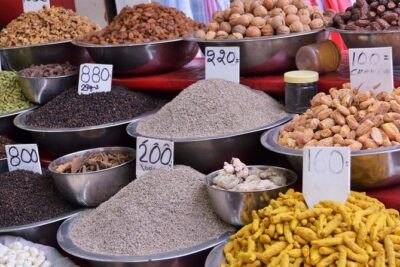
Next is Khari Baoli, described as Asia’s largest spice market. It’s the kind of place where you notice smells and colors before you notice anything else. Entrance isn’t included, which makes sense since this is a market stop, not a ticketed attraction.
Tip: if you plan to shop, go with cash and keep bargaining calm and short. Your guide can help with timing if you want a quick browse rather than a long shopping detour.
UNESCO-era Mughal monument, viewed from outside
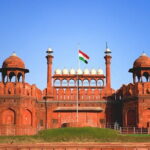
The day also includes an exterior view of a UNESCO World Heritage site and a symbol of Mughal power. Since the plan specifically says view from outside, I’d treat it as a photo-and-orientation moment rather than a full inside visit.
Agrasen Ki Baoli (stepwell): the pause you didn’t know you needed
Then comes Agrasen Ki Baoli, a mysterious ancient stepwell with arched niches. It’s included with a short time block and free admission. Stepwells aren’t just architecture; they’re also a reminder that older Delhi life was shaped by water systems.
If you like unusual structures, this is the kind of stop you’ll remember.
Gurudwara Bangla Sahib: peaceful reset (and langar)
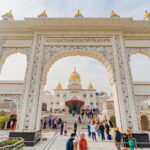
At Gurudwara Bangla Sahib, you get a serene temple setting with a holy-water pond (sarovar) and the community kitchen (langar). Admission is free.
Why I like this kind of inclusion: after crowds and traffic, a calm stop helps your day feel balanced. It also gives you a different lens on Indian religious life beyond forts and palaces.
India Gate and the British-era government building exterior
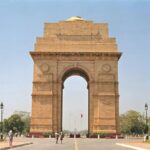
You’ll also stop at India Gate (war memorial honoring Indian soldiers) and then see an iconic British-era government building exterior. Both are marked as included, with short time windows.
Practical note: these are quick stops, best used for photos, a quick walk-through, and then moving on.
Humayun’s Tomb and Gandhi Smriti
After a UNESCO-listed Humayun’s Tomb (1 hour listed; entrance not included), you’ll visit Gandhi Smriti, the house where Mahatma Gandhi spent his final days, now a memorial. Gandhi Smriti is free and short.
This pairing works because Humayun’s Tomb brings Mughal-era grandeur, while Gandhi Smriti ties modern India to the same city—same roads, different eras.
Lotus Temple and Qutub Minar to wrap Delhi
You’ll also go to the Lotus Temple (Bahá’í House of Worship, free) and then Qutub Minar (ticket not included). The plan highlights Qutub Minar as a 73-meter tower of victory and part of a UNESCO site.
Qutub Minar is one of those sights where time spent helps. Even if you only have 45 minutes, plan for photos plus a slow look rather than rushing.
The Agra travel day: Yamuna Expressway and the Taj lead-in
Day 3 is a drive day: after breakfast, you head from Delhi to Agra via Yamuna Expressway, about 3.5 to 4 hours.
This matters because it reduces the most stressful part of the Golden Triangle—slow roads. It also helps you arrive with enough energy to do more than one sight.
Taj Mahal view point at sunset
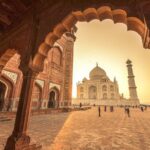
On arrival, you’re taken to a Taj Mahal view point for a serene sunset look. This is included in the timing, and the entrance isn’t listed, which suggests it’s a viewpoint stop rather than a ticketed entry.
Why the sunset concept is smart: the Taj is not just a daytime monument. Soft light can make the marble look different by the minute. If you’re the type who likes photography, sunset is where you’ll feel you got value.
Itmad-ud-Daula, aka Baby Taj
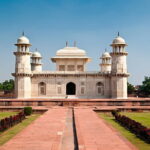
Then you visit Itmad-ud-Daula, described as the Baby Taj. It’s known for intricate marble work and it predates the Taj Mahal.
This is a great second-tier stop because it’s detailed and often less overwhelming than the main event. If you’re someone who likes craftsmanship, you’ll enjoy the careful decoration more than rushing through large halls.
Day 4 at the Taj Mahal and Agra Fort: timing, then variety
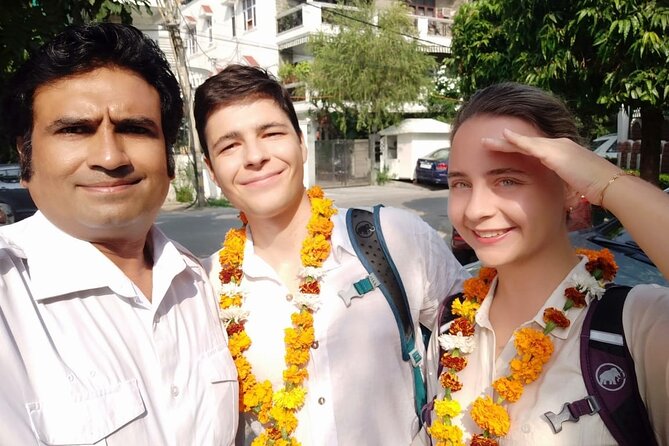
Day 4 is the big one: Taj Mahal first, then Agra Fort, then onward to Jaipur.
Taj Mahal with first rays of sunlight
The plan describes witnessing the Taj as the first rays hit its white marble. Even if you don’t obsess over the exact light moment, starting early is the right call for fewer crowds and better visibility.
The Taj time block is listed as 2 hours, and entrance isn’t included. So you’ll want to keep your schedule clean and your expectations realistic: the Taj is popular, and you’ll be moving through organized areas.
Agra Fort: Mughal power in sandstone and marble
Next is Agra Fort, a UNESCO World Heritage site and former residence of Mughal emperors. You explore palaces, audience halls, and Mughal gardens (1 hour listed; entrance not included).
Why it pairs well with the Taj: the Taj is romantic and iconic, while Agra Fort shows the political machine behind it. You get both the symbolism and the governance side of the story.
On to Jaipur after Agra
After finishing Agra, the tour departs for Jaipur. You check into your hotel for an overnight stay. This keeps the flow moving instead of turning Day 4 into a late-night scramble.
Day 5 in Jaipur: forts, stepwells, and a science stop
Jaipur is a mix of big-ticket architecture and more curious stops. Day 5 includes enough variety that you don’t get sight fatigue.
Amber Palace and the Sheesh Mahal
You’ll visit Amber Palace, with time for the Sheesh Mahal (Mirror Palace) and Diwan-i-Aam. It’s 2 hours listed; entrance not included.
Amber is big, and it’s also textured. It’s not just a photo façade—you’ll feel the blend of Rajput and Mughal architectural styles.
Practical note: wear shoes you can walk in. Jaipur fort terrain isn’t designed for delicate footwork.
Panna Meena ka Kund stepwell
Then you stop at Panna Meena ka Kund, described as a beautifully symmetrical stepwell with a striking stair pattern. It’s free and short (15 minutes listed).
This is the kind of stop I like in a long day: quick, distinctive, and not overly exhausting.
Jal Mahal photo stop
You’ll see Jal Mahal, the water palace in Man Sagar Lake. This is a 30-minute stop marked as free and likely focused on photos and viewing rather than entry.
If you’re expecting a museum visit, adjust your mindset. It’s for looking, framing, and moving on.
Gaitore Ki Chhatriyan cremation grounds
Next is Gaitore Ki Chhatriyan, Jaipur’s royal cremation grounds with intricately carved cenotaphs. Free and 30 minutes.
This is another “not just a palace” stop. It adds a human and cultural layer to the city’s royal story.
City Palace: still tied to the royal family
You then visit City Palace of Jaipur, a royal residence with courtyards and museums, and still used by the royal family. 1 hour listed; entrance not included.
This is where you’ll get context for how Jaipur’s royal heritage continues to matter in everyday life.
Jantar Mantar: the UNESCO observatory angle
You’ll also go to Jantar Mantar, a UNESCO-listed astronomical observatory with the world’s largest stone sundial and 19 other scientific instruments. It’s 1 hour listed; entrance not included.
If you think of India only through forts and temples, this is a shift. It’s architecture-as-science, built for measurement and observation.
Hawa Mahal exterior: the Palace of Wind
Then comes Hawa Mahal, the five-story façade known for 953 windows designed for royal women to watch street festivals. It’s short (20 minutes) and free, with entrance not included.
Since the emphasis is on the exterior façade, keep your expectations aligned: you’re capturing the look and understanding the design.
Day 6: return to Delhi with an easy wrap-up
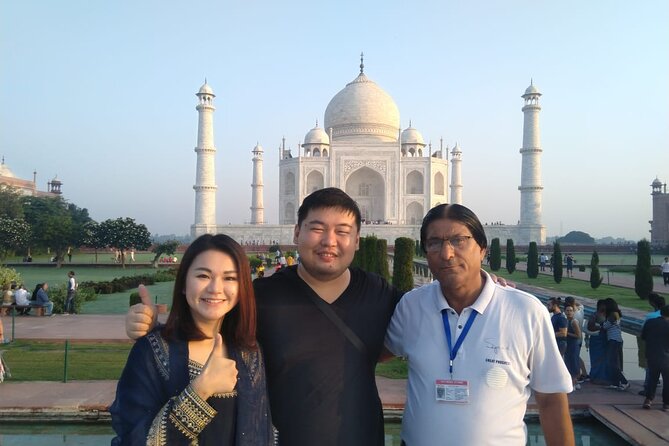
Day 6 is a calmer finish. After breakfast, you travel back to Delhi (about 5 hours listed). The plan allows you to be dropped off at any desired location in Jaipur if you continue elsewhere, which is handy.
This final day is mostly about transfer. You’ll arrive with the sense that the trip is closing instead of racing.
What you’ll miss (and what you can adjust)
A private tour gives you control, but it also means you’re taking the operator’s pace and route design. Here, the itinerary is built to include major highlights across all three cities, which means limited time for deep sidetracks.
The good news: the tour explicitly says you can adjust the schedule for extra activities, shopping, food experiences, or cultural performances. If you want more time at markets, a later departure on a day, or a different monument order, you have a pathway to request changes.
Who this private Golden Triangle fits best
This is a great match if:
- You want private guides and transport instead of shared groups
- You care about comfort during long drives and frequent moving days
- You want the key “must-sees” without DIY planning stress
- Your group is small enough that a private vehicle matters (and the tour provides the right size)
It may be less ideal if:
- You prefer totally self-directed travel with no schedule
- You’re trying to keep costs ultra-low, since entrance fees are extra and monuments are the main ticketed items
Should you book this 6-day Golden Triangle tour?
If you want a Golden Triangle that runs like a guided plan—pickup done, drivers waiting, hotels handled, and local experts steering you—this is a strong option. The best signs are the private structure and the practical touches that reduce friction, plus real evidence that the guide and driver can handle traffic and still help you see a lot.
My final advice: budget for monument entrance fees up front (₹6,000 per person listed), and wear comfortable shoes for fort days. If you like having your time protected by a team—especially when Delhi traffic turns chaotic—this is the kind of tour that makes the route feel doable instead of exhausting.
FAQ
How does pickup work for this tour?
You can get pickup from your airport, railway station, hotel, or any desired location in Delhi, Noida, or Gurugram.
Is this tour fully private or shared with other groups?
It’s a fully private tour. You’ll have your own vehicle, driver, and local guides in each city with no shared transport.
What cities does the 6-day Golden Triangle cover?
It covers Delhi, Agra, and Jaipur.
Are hotel stays included?
Five nights’ accommodation is included when you book the option with hotels. Daily breakfasts are included with those hotel stays.
What about entrances to monuments and sights?
Entrance fees are not included, and the tour lists an entrance fee of ₹6,000 per person for all monuments.
Do I get transportation between cities?
Yes. You get private, air-conditioned transport between cities with an experienced driver, and the vehicle type is matched to your group size.
Are any special transport options included for the Taj area?
Yes. There’s a battery-powered bus ride to and from the Taj Mahal parking area included.
Is food included on the tour?
Lunch and dinner are not included. Only daily hotel breakfast (5) is included if you book the hotel option.
Can I cancel for free?
Yes. You can cancel for a full refund up to 24 hours in advance of the experience’s start time.