REVIEW · NEW DELHI
Divine Delhi: Explore Indian Faiths on a Cultural Tour
Book on GetYourGuide →Operated by Go City Adventures · Bookable on GetYourGuide
Delhi turns faith into street-level reality. On this tour, I love how five traditions can feel like one easy day plan, with a guide who explains what you’re seeing instead of rushing you through photo stops. I also like the practical comfort: hotel pickup, an air-conditioned vehicle, and short guided visits that keep the pace manageable. One possible drawback: Delhi can be busy, and if a guide arrives with the wrong sequence of stops, you may need to politely confirm the route early.
You’ll spend real time in the places people actually pray, eat, and gather—plus you’ll walk through the city’s energy near Chandni Chowk. If you’re the type who wants meaning with your monuments, this is a good fit.
This is a private-group format with an English-speaking guide (with other languages available), and you’ll even get a light snack to keep you going. Just note: lunch is not part of the deal, so you may want a plan for after you’re dropped back.
In This Review
- Key things to know before you go
- Six hours across Delhi’s different faith worlds
- Jain Lal Mandir and the Jain Birds Hospital behind the main shrine
- Gurudwara Bangla Sahib: Guru Har Krishan and the Sarovar pool
- Birla Mandir (Laxmi Narayan): why names matter in Hindu worship
- Sacred Heart Cathedral: Roman Catholic worship in New Delhi
- Lotus Temple: a quick guided pause in a different kind of calm
- Hazrat Nizamuddin Mausoleum and qawwali nights that people live for
- Price and value: is $15 a smart deal for this kind of day?
- Who should book this tour?
- A small risk to keep in mind
- Should you book Divine Delhi?
- FAQ
- How long is the Divine Delhi tour?
- What does the tour cost?
- What’s included in the price?
- Is lunch included?
- Which areas do pickup and drop-off cover?
- Which languages are available for the guide?
- Is this tour a private group?
- Is the tour wheelchair accessible?
- Which places of worship are visited?
- Is free cancellation available?
- Can I reserve without paying immediately?
Key things to know before you go
- Multi-faith route: Jain, Sikh, Hindu, Catholic, and Sufi sites in one day
- Old Delhi timing: Jain Lal Mandir near Red Fort and Chandni Chowk
- Bangla Sahib’s Sarovar: a prayer complex built around its pool
- Birla Mandir context: Laxmi Narayan explained in plain terms
- Last-stop energy: Hazrat Nizamuddin and the world of qawwali
- AC + hotel pickup: comfortable travel between compact guided visits
Six hours across Delhi’s different faith worlds
Divine Delhi is built for people who want more than one “pretty temple” shot. The core idea is simple: you move between major houses of worship—Jain, Sikh, Hindu, Christian, and Sufi—while a local guide gives the background that makes the buildings and rituals make sense.
The rhythm is also practical. You’re not stuck on a bus all day; you get guided time at each site, then you’re back on the road with air-conditioning when the streets feel too much. You’ll also get a chance to walk in busier areas, so wear shoes you can trust.
As for the group size, it’s private. That matters more than it sounds. When you can ask questions without competing with a crowd, the guide’s explanations land better—and you notice more details you’d otherwise gloss over.
You can also read our reviews of more historical tours in New Delhi



Jain Lal Mandir and the Jain Birds Hospital behind the main shrine
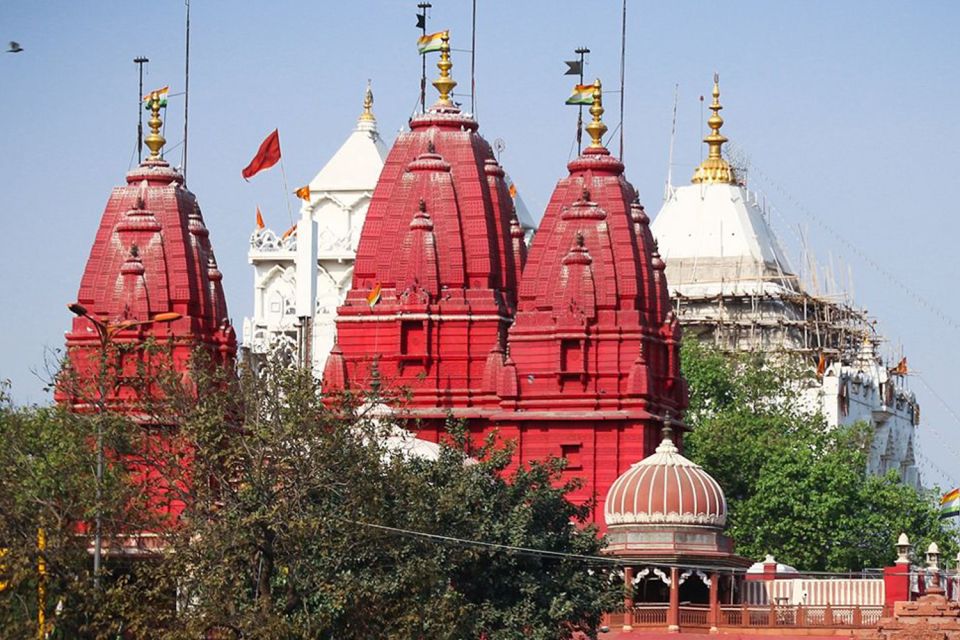
Your day starts at Sri Digambar Jain Lal Mandir, one of Delhi’s best-known Jain temples, and famously the oldest in the city. The location alone gives you an immediate sense of how layered Old Delhi is: the temple sits directly across from Red Fort in Chandni Chowk.
Inside, what I like is that Jain worship isn’t presented as abstract philosophy. Even if you don’t know Jain traditions, the guide can help you read the space: who comes here, what the temple represents, and why this site matters to Jain communities in Delhi.
Then there’s the detail that tends to stick with people—the Jain Birds Hospital. It’s in a second building behind the main temple, and it’s a reminder that religious compassion in India often shows up in everyday care, not just prayers. If you like meaningful “look closer” moments, you’ll appreciate this stop.
Watch for crowds and timing. Chandni Chowk areas can feel intense, and the temple can be busy. You’ll likely have a guided window of about 40 minutes, which is enough to see the highlights without turning it into a marathon.
Gurudwara Bangla Sahib: Guru Har Krishan and the Sarovar pool
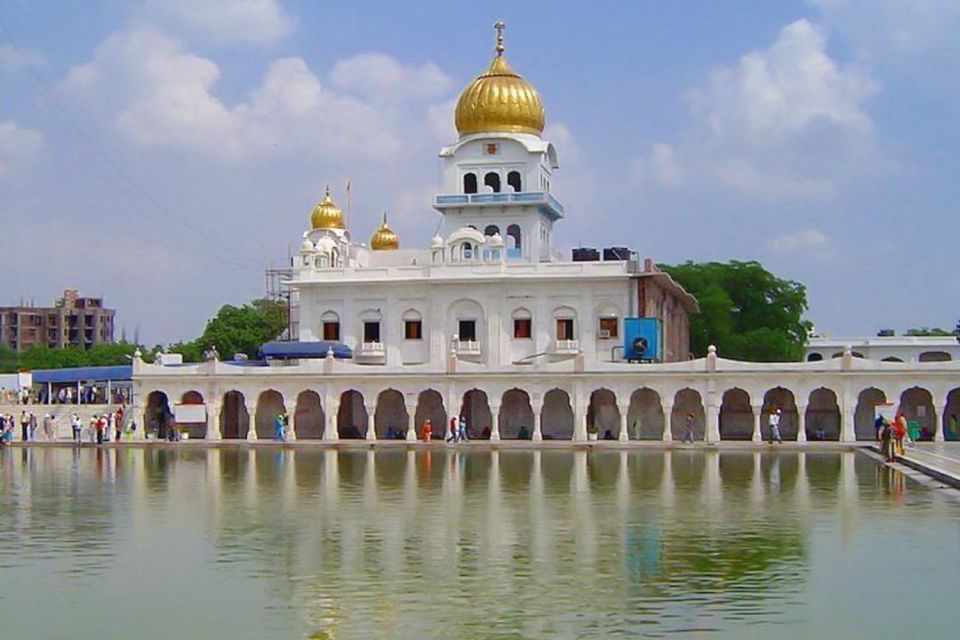
Next comes Gurudwara Bangla Sahib, one of the most prominent Sikh gurdwaras in Delhi. It’s known for its connection to the eighth Sikh Guru, Guru Har Krishan. That connection isn’t just name-dropping—the guide’s explanation is what makes the link feel relevant, and not like a history lesson you’ll forget at dinner.
The big visual here is the Sarovar, the pool inside the complex. Even if you don’t have a lot of background on Sikhism, the pool gives you a clear focal point for how the space is organized. The tour helps you understand that this is not only about architecture; it’s about a place of gathering and shared devotion.
One reason people get excited about this stop is the community side of Sikh worship. You may see how the gurdwara’s kitchen operates and how it supports feeding others. In one account of the experience with a guide named Sandeep, the community kitchen stood out for how volunteers from different backgrounds support meals for everyone—and the idea felt less like a spectacle, more like a core part of daily life. Even if your visit doesn’t include hands-on time, this is the kind of stop where the guide can point out what matters.
Practical tip: keep your phone ready, but don’t let it run the show. These places move on a human rhythm. You’ll enjoy it more if you give the guide room to explain before you snap.
Birla Mandir (Laxmi Narayan): why names matter in Hindu worship
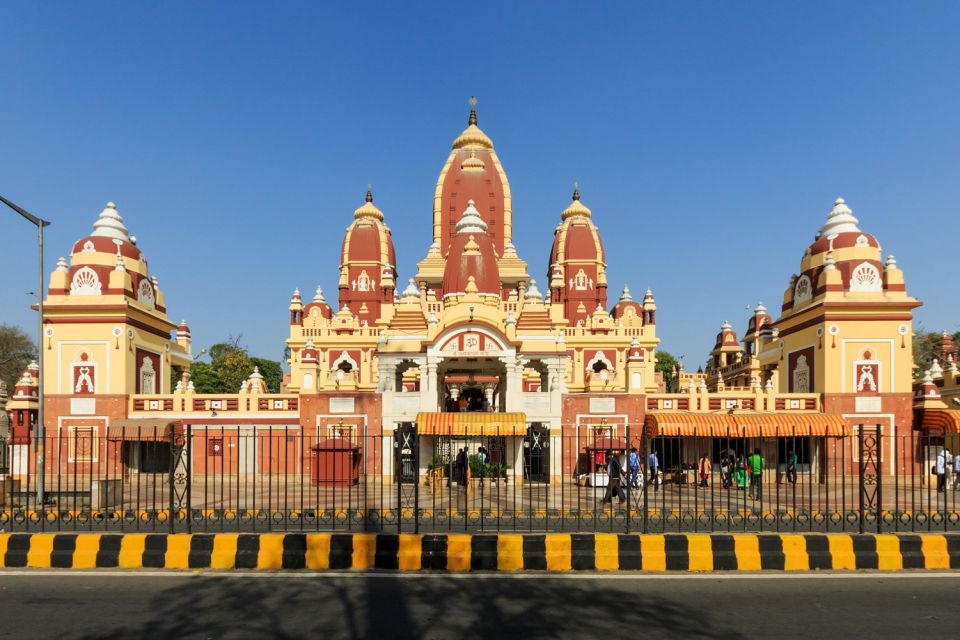
After the Sikh site, the tour moves to the Laxmi Narayan Temple, also called the Birla Mandir. Laxminarayan refers to Laxmi and Narayan—where Narayan is often associated with Vishnu, the preserver in the Trimurti, paired with Lakshmi.
This stop is a good moment to slow down mentally. Hindu temples can look complex, especially if you’re used to worship spaces that feel more uniform from country to country. The guide’s job here is valuable: explain the meaning behind the names, how the deity pairing is understood, and what worship might look like when people come with different intentions than you expect.
Also, there’s a built-in break here. You’ll enjoy a light snack with your guide before heading to the next religious site. That simple pause is a smart design choice in a six-hour day—especially in Delhi, where your energy can drop faster than you think.
One consideration: dress codes and expectations can vary by site. The safest approach is to dress respectfully (nothing too revealing) and follow any on-the-ground instructions from staff.
Sacred Heart Cathedral: Roman Catholic worship in New Delhi
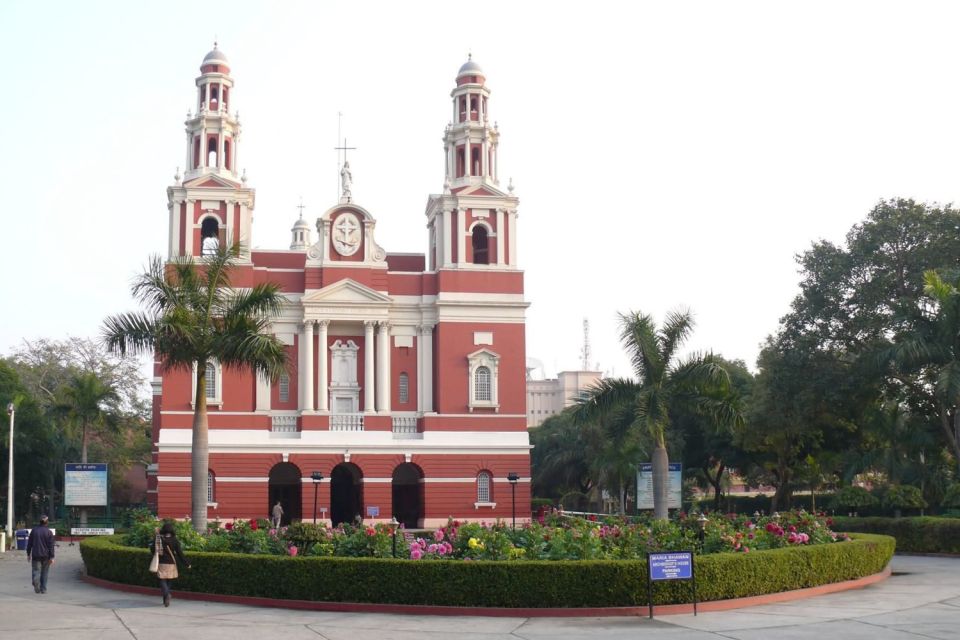
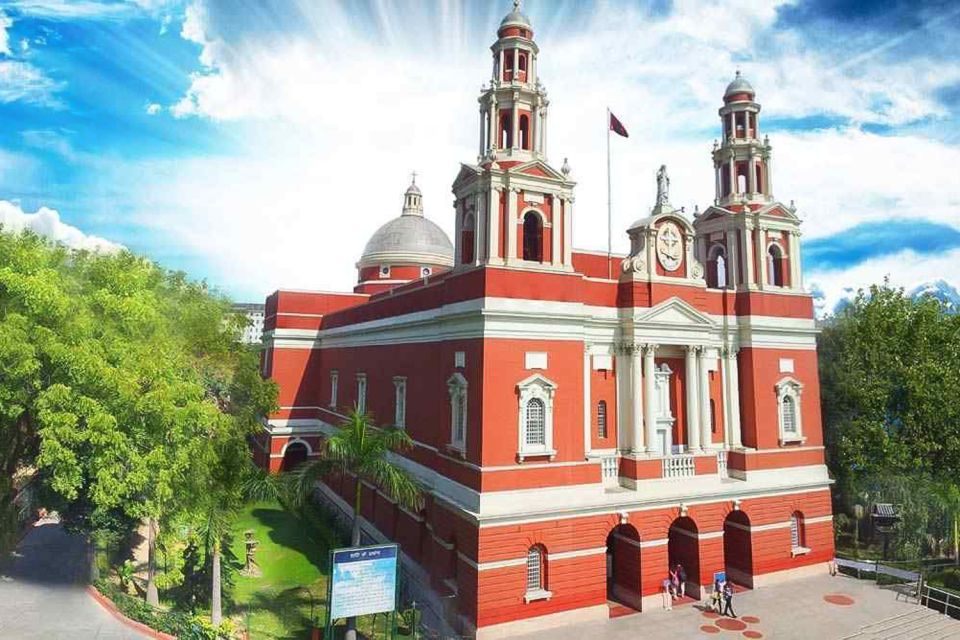
Then you’ll visit the Sacred Heart Cathedral, a Roman Catholic cathedral belonging to the Latin Rite. It’s also one of the oldest church buildings in New Delhi, which helps you connect today’s skyline with earlier chapters of the city.
What I find useful about this stop is the contrast. You’re coming from spaces that center different scriptures and rituals, and now you see a Christian worship space with its own architecture and traditions. A guide can make that contrast feel like understanding, not confusion.
At this point in the day, you’ll likely notice a pattern: each site has a role in community life, not only in personal faith. The tour keeps pulling you back to that theme—how people gather, how they mark sacred time, and how a building becomes a meeting place.
Your guided time here is shorter, around 30 minutes. That’s enough to grasp the basics and see the main areas without losing the flow of the day.



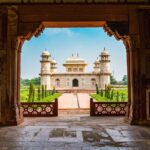


Lotus Temple: a quick guided pause in a different kind of calm

Between the cathedral and the final Sufi shrine, the tour includes a stop at the Lotus Temple. You get a guided visit of about 20 minutes, which works well as a breather.
I like this scheduling choice. After several tightly structured worship spaces, a shorter stop can reset your attention. You’re not forced to absorb everything at once. Instead, you get a guided introduction, then you move on.
What you can expect here is simple: you’ll have time with the guide, and you’ll get oriented so you don’t miss the point of why the site gets so much attention.
Tip: if you’re someone who likes to read details, bring patience. Even a brief visit can feel faster than it is in your head, so listen carefully to what the guide emphasizes.
Hazrat Nizamuddin Mausoleum and qawwali nights that people live for
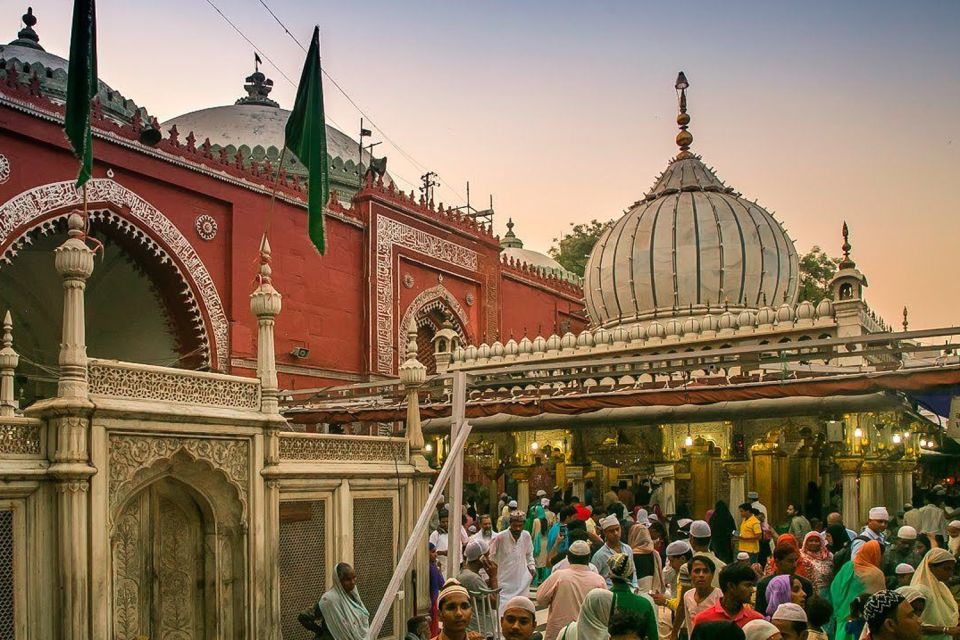
Your last major stop is Hazrat Nizamuddin Dargah, also called the Nizamuddin Mausoleum, associated with the Sufi saint Khwaja Nizamuddin Auliya. This is one of the big pilgrimage centers in Delhi, with thousands of pilgrims visiting every week.
The atmosphere here tends to feel different from the earlier stops, partly because Sufi devotion has a strong musical tradition. The site is also known for evening qawwali sessions—Sufi Islamic devotional music—and it’s the kind of cultural detail that makes the place feel alive even beyond daylight hours.
Your guided time is about 30 minutes, so you won’t get the full evening program in a guaranteed way. Still, even in daytime, you’ll likely sense why people plan their week around these moments.
One caution for the final stop: plan your energy. By now you’ve seen several sacred places, plus you’ve done some street walking. Keep water handy, stay aware of your surroundings, and let the guide set the pace—this is where people tend to get a little tired and miss the best explanations.
Price and value: is $15 a smart deal for this kind of day?
At about $15 per person for a 6-hour guided tour, Divine Delhi can feel like a bargain—especially because you’re not paying separately for basics that add up in Delhi.
Here’s where the value usually comes from:
- Hotel pickup and drop-off in Delhi-area locations
- An English-speaking professional guide (with other languages available)
- Air-conditioned vehicle for getting between sites
- Light snack so your day doesn’t crater
- Skip-the-line access via a separate entrance
- Private group format, which can make a low-cost tour feel more personal
What’s not included is lunch. That’s the main thing that can change the real cost of your day. If you’re sensitive to hunger, you may want to eat before you go or be ready to grab something after you’re dropped back.
Also, keep expectations aligned with the time. Six hours is not enough to linger for hours in each place. The tour’s strength is smart pacing plus explanation—not long free roaming.
Who should book this tour?
I think this tour fits best if you:
- Want a guided map of Delhi’s major faith traditions without spending the whole day planning
- Enjoy learning from a local guide and asking questions
- Prefer a structured day with air-conditioned breaks rather than independent hopping
- Like cultural context—how daily life and worship connect
It may be less ideal if you:
- Want a long, slow visit to just one site
- Hate crowds or get overwhelmed easily by busy areas (Chandni Chowk is a real-world factor)
- Are looking for a fully flexible day with no set timing at each stop
A small risk to keep in mind
One real-world wrinkle can happen anywhere: sometimes a guide can be given the wrong plan order. If you notice the route doesn’t match what you expected, calmly confirm the next stop and ask for a quick correction. Private-group formats usually reduce this risk, but it’s still smart to be awake on day one.
Should you book Divine Delhi?
Yes—if you want a low-stress, high-learning introduction to Delhi’s faith landscape, this tour is a solid choice. The route makes sense for a single day: you start with Jain worship by Red Fort, move through Sikh and Hindu temples, add a Christian stop, include a quick pause at Lotus Temple, and finish at Nizamuddin with its Sufi devotion and qawwali connection.
Just go in knowing it’s a guided sprint, not a slow study. If you’re prepared to be respectful in sacred spaces, ask questions, and accept that lunch is on you, you’ll likely leave with more understanding than you had at pickup.
FAQ
How long is the Divine Delhi tour?
It lasts 6 hours.
What does the tour cost?
The price is $15 per person.
What’s included in the price?
You get hotel pickup and drop-off, an English-speaking professional guide, transportation by air-conditioned vehicle, a light snack, and skip-the-line entry through a separate entrance.
Is lunch included?
No, lunch is not included.
Which areas do pickup and drop-off cover?
Pickup and drop-off options include Noida, Delhi, Gurugram, and New Delhi.
Which languages are available for the guide?
The guide can be provided in English, Spanish, German, Italian, or French.
Is this tour a private group?
Yes, it’s a private group.
Is the tour wheelchair accessible?
Yes, it’s listed as wheelchair accessible.
Which places of worship are visited?
The tour includes Sri Digambar Jain Lal Mandir, Gurudwara Bangla Sahib, Laxmi Narayan Temple (Birla Mandir), Sacred Heart Cathedral, Lotus Temple, and Hazrat Nizamuddin Mausoleum/Dargah.
Is free cancellation available?
Yes. You can cancel up to 24 hours in advance for a full refund.
Can I reserve without paying immediately?
Yes. It offers reserve now & pay later, so you can book your spot and pay nothing today.