REVIEW · NEW DELHI
6 Days: Golden Triangle With Ranthambore Tour With 5 Star Hotels
Book on Viator →Operated by Unseen Tours and Travels · Bookable on Viator
Delhi, Jaipur, Agra, then Ranthambore in one tight loop sounds intense, but that’s exactly why this trip works. You get private air-conditioned driving with local guidance, so you spend less time figuring things out and more time seeing real sights.
Two things I’d put at the top: the chance to go from UNESCO monuments straight into Bengal tiger country, and the way the tour handles major logistics—hotel stays, drivers, and guides—so your days feel organized instead of stressful. One thing to think about first: it’s a packed schedule, and monument entry costs may not be fully included unless you pick the 5-star option.
In This Review
- Key moments that make this tour worth a look
- How the Delhi-to-Jaipur-to-Ranthambore-to-Agra Loop Keeps You Sane
- Price and Value: What $387 Covers (and Where Costs May Still Appear)
- Day 1 in Delhi: Red Fort, Jama Masjid, Qutub Minar, Humayun’s Tomb
- Day 2 Jaipur: Albert Hall Museum, Birla Mandir, Patrika Gate
- Day 3 Jaipur Royal Sights: Amber Fort, City Palace, Jantar Mantar, Hawa Mahal
- Day 4 Ranthambore National Park Safari: Tigers, Crocs, and the Long Wait
- Day 5 Agra and Fatehpur Sikri: From UNESCO Courtyards to the Taj Mahal
- Day 6 Back to New Delhi: One Last Morning, Then Drop-Off
- Who This Tour Suits Best (and Where It Might Feel Tight)
- Should You Book This 6-Day Golden Triangle With Ranthambore?
- FAQ
- How long is the tour?
- Where does the tour start and where do you end?
- What hotel standard is included?
- Are monument entry fees included?
- Is the Ranthambore safari private?
- Can I cancel and get a refund?
Key moments that make this tour worth a look
- Private AC vehicle + experienced driver to move you between cities without hassle
- Guides in Delhi, Jaipur, Fatehpur Sikri, and Agra to add context at big sites
- Ranthambore shared safari built around wildlife viewing, not just sightseeing photos
- 4- or 5-star hotel stays with breakfast for a comfortable base during the rush
- Two included dinners, including a traditional family dinner in Jaipur
- 5-star option can include monument entry fees, which helps budget planning
How the Delhi-to-Jaipur-to-Ranthambore-to-Agra Loop Keeps You Sane
This is designed as a classic North India circuit: start in New Delhi, then work your way through Jaipur, down to Ranthambore National Park, and finish in Agra before returning to Delhi. The big practical win is the private, AC transport with an experienced driver. You’re not hunting for cars, negotiating routes, or losing time to transfers.
You also get pickup offered and a mobile ticket, which matters in India where access rules and meeting points can change. And even though it’s a private tour for your group, the safari portion is listed as a sharing safari when you choose the hotel options—so wildlife time is communal, not fully private.
The pace is the trade-off. This is not a slow travel plan with long breaks. It’s more like: pick a few big days, hit the highlights, then use your energy at the sites that matter most to you.
You can also read our reviews of more tours and experiences in New Delhi



Price and Value: What $387 Covers (and Where Costs May Still Appear)
The price shown is $387 per person for about 6 days / 5 nights. That base cost matters because you’re not just buying tours—you’re buying movement, guides, and accommodation structure.
Here’s what the included value looks like:
- 5 nights in 4- or 5-star hotels, based on the option you select, with breakfast
- Private AC vehicle with an experienced driver
- Guides at major stops in Delhi, Jaipur, Fatehpur Sikri, and Agra
- One dinner with an Indian family in Jaipur plus one dinner at a hotel in Ranthambore
- Monument entry fee only with the 5-star option (the itinerary notes admission tickets as not included on multiple stops)
What might not be included:
- Lunch and most dinners (unless specified)
- Monument entry fees when you’re on the 4-star option, since multiple stops list admission tickets as not included
- Tips, shopping, and personal expenses
So your best value move is to look at your style. If you’d rather avoid extra ticket purchases, the 5-star option that includes monument entry fees may save money and time. If you’re comfortable paying certain entry fees on arrival (and you want to keep the hotel budget lighter), the 4-star option can make sense.
Day 1 in Delhi: Red Fort, Jama Masjid, Qutub Minar, Humayun’s Tomb
Delhi starts strong with four major Mughal-era and UNESCO-linked stops in about a day: Red Fort, Jama Masjid, Qutub Minar, and Humayun’s Tomb. The listed visit times are short per site (around 30 minutes each), so you’ll want to treat this day as orientation and highlights, not deep museum-level study.
What makes this set of stops good is how they tell a story across different architectural eras:
- Red Fort (Lal Qila): built in 1638 under Shah Jahan after shifting the capital from Agra to Delhi, with the fort functioning as Mughal residence. Even in a quick visit, the size and layout make it feel like a city inside a city.
- Jama Masjid: one of the largest mosques in India, built by Shah Jahan (1650–1656). Seeing it briefly helps you understand why it’s such a key Delhi landmark.
- Qutub Minar: part of the Qutb complex tied to Delhi’s earliest fortified city, Lal Kot. It’s a tall visual anchor for the skyline.
- Humayun’s Tomb: commissioned in 1558 by Empress Bega Begum, designed by Persian architects—one of the better places to start recognizing Mughal design patterns.
A small extra stop is included: the Parliament House area near Rashtrapati Bhavan on Sansad Marg. It’s a quick look at modern governance next to centuries of empire.
Main consideration: because admission tickets are listed as not included for multiple stops, plan for entry fees unless you select the option that includes monument entries. Also, this is a lot to take in back-to-back—great if you want momentum, less great if you prefer slow photo walks.
Day 2 Jaipur: Albert Hall Museum, Birla Mandir, Patrika Gate
Jaipur day is lighter and more varied, which I like after the intensity of Delhi. You start with Albert Hall Museum (about 1 hour). It’s described as the oldest museum in Rajasthan and also functions as the state museum, housed in an Indo-Saracenic building in Ram Niwas Garden.
Then you shift to faith and views:
- Birla Mandir Temple: white marble, built in 1988 by the B.M. Birla Foundation, listed as admission free.
- Patrika Gate: an entranceway to Jawahar Circle Park, described as the biggest circular park in Asia. This is more of a photo-and-stroll stop than a ticket-heavy site.
Why this mix works: a museum gives you context, then you move to religious architecture and public space. It’s a day that helps you understand Jaipur as a living city, not only a backdrop for forts and palaces.
Potential drawback: because two of the stops are shorter, the day can feel like a “warm up” before the heavier fort-and-palace day. If you love museums, spend your museum time well. If you prefer big interiors, be ready that Birla Mandir is more about structure and atmosphere than long touring.
Day 3 Jaipur Royal Sights: Amber Fort, City Palace, Jantar Mantar, Hawa Mahal
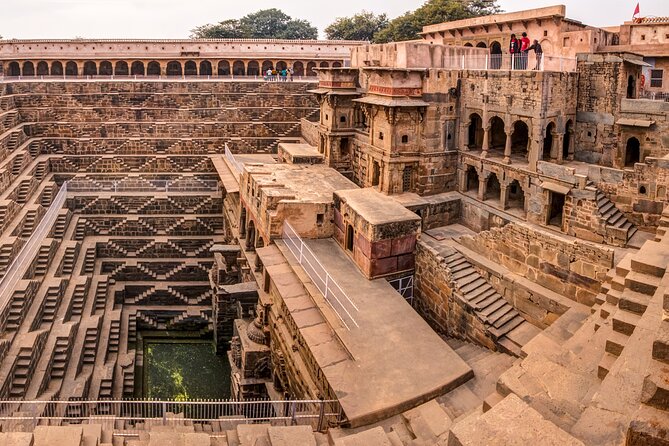
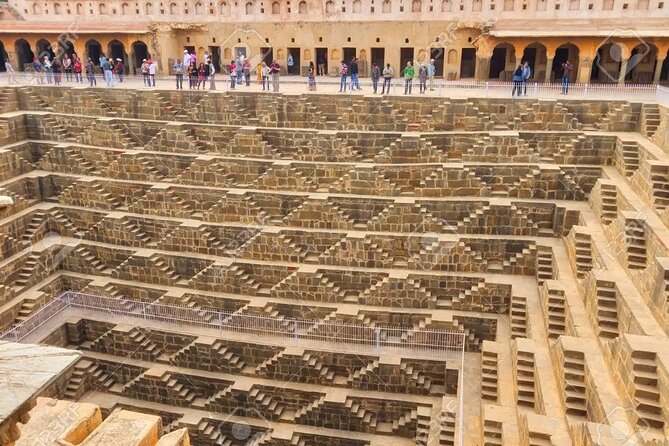
This is the big Jaipur day. You’re looking at a trio of top-tier landmarks—Amber Fort, City Palace, and Jantar Mantar—plus Hawa Mahal and a quick look at Jal Mahal.
- Amber Fort (Amer/Amber): about 1 hour 30 minutes. It’s rooted in Raja Man Singh’s work, with later additions by Sawai Jai Singh. This is where your Jaipur adventure stops being theoretical and becomes visual: walls, courtyards, and the feel of a fortified royal center.
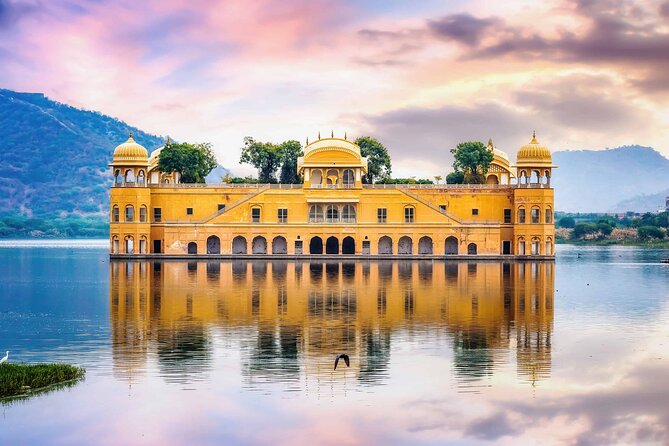
- Jal Mahal: described as a palace in the middle of Man Sagar Lake. You might mainly experience this as a scenic stop (it’s listed as a stop with no time), which still works because it’s a distinct look.
- City Palace of Jaipur: about 40 minutes. Founded by Maharaja Sawai Jai Singh II when he moved his court to Jaipur in 1727. The point here is understanding how the royal court shaped the city.
- Jantar Mantar: about 40 minutes and UNESCO listed. It’s a collection of astronomical instruments built by Sawai Jai Singh II, completed in 1734, and features the world’s largest stone sundial.
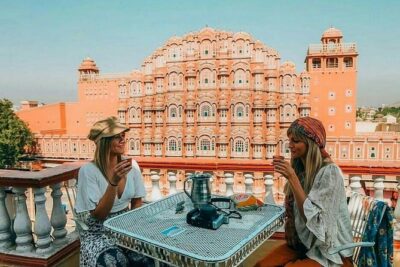
- Hawa Mahal: a red and pink sandstone palace on the edge of the City Palace, built with extensions into the Zenana, or women’s chambers.
Two practical notes. First: multiple stops list admission tickets as not included, so costs may pop up. Second: with several sites packed in, the “best” way to enjoy this day is to pick your priorities. If you care most about engineering and astronomy, Jantar Mantar is the anchor. If you’re a fort person, make sure Amber Fort gets your best attention.





Day 4 Ranthambore National Park Safari: Tigers, Crocs, and the Long Wait
Now the trip changes gears. Day 4 is about Ranthambore National Park and wildlife viewing. You get about 3 hours at the park, with the site described as a former royal hunting ground and home to tigers, leopards, and marsh crocodiles. That’s the pitch, but the deeper value is that Ranthambore gives you a chance to see wildlife in a landscape that’s tied to the region’s human story.
Key landmarks mentioned within the park:
- Ranthambore Fort (10th century) on a hilltop
- Ganesh Mandir inside the park
- Padam Talao Lake, known for water lilies
What to expect from the safari component: the tour includes a sharing safari when you choose the hotel options. That means you’re not driving your own vehicle through the reserve; you’ll be in a shared wildlife experience where timing and sightings depend on conditions and park rules. Tiger sightings are never something you can bank on, but the fact that the park is explicitly listed for Bengal tigers tells you this is a serious wildlife-focused day, not a quick stop.
Main consideration: if you’re hoping for a private, guaranteed tiger encounter, this is not that kind of safari. If your goal is to maximize your chances within a structured program, it’s a good fit.
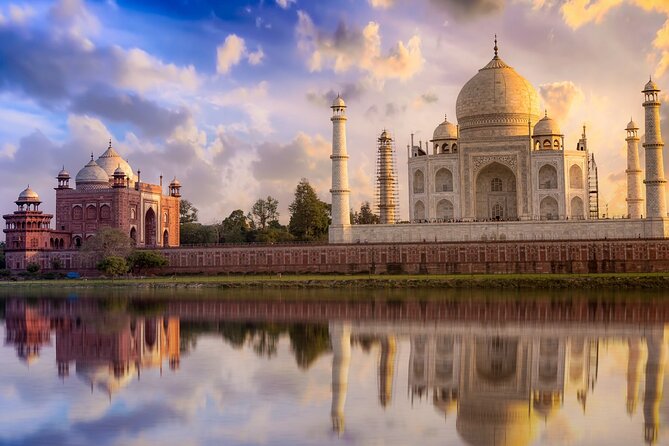
Day 5 Agra and Fatehpur Sikri: From UNESCO Courtyards to the Taj Mahal
Day 5 mixes two pilgrimage-level landmarks with one big fortress: Fatehpur Sikri, the Taj Mahal, and Agra Fort.
- Fatehpur Sikri: described as a 16th-century Mughal city founded by a 16th-century emperor, with red sandstone buildings clustered at its center. You’ll pass key elements like Buland Darwaza gate, the nearby marble Tomb of Salim Chishti, and halls such as Diwan-E-Khas, plus Jodha Bai Palace and the Panch Mahal with its multi-story overlooks. This place often feels like walking through the plan of a powerful era.
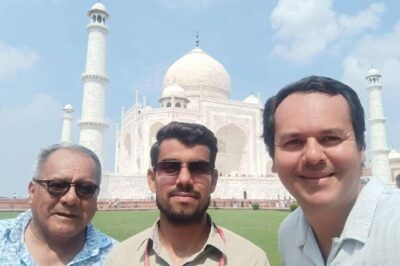
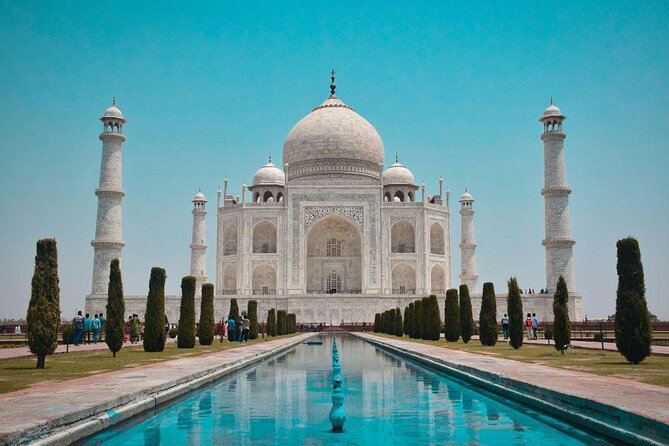
- Taj Mahal: about 1 hour 30 minutes. The description is straightforward: ivory-white marble mausoleum on the Yamuna’s right bank, commissioned in 1632 by Shah Jahan for Mumtaz Mahal, and also housing Shah Jahan’s tomb.
- Agra Fort: about 40 minutes, built 1565–1573 for Akbar and later used across Mughal history until the capital shifted to Delhi.
Practical consideration: Taj Mahal entry is explicitly listed as not included under admission ticket details, and Monument Entry Fees are only noted as included with the 5-star option. So budget for entry costs unless you’re on the package that covers them.
Also, this day is emotionally heavy in the best way. You’ll go from an entire Mughal city to the most famous mausoleum in India and then to a fort—so keep your expectations flexible. You may not want to “power through” photos here. Let the moments land.
Day 6 Back to New Delhi: One Last Morning, Then Drop-Off
Day 6 is simple: after breakfast, you’re dropped in New Delhi at your desired destination. That’s useful if you’re catching a flight later, meeting someone in the city, or just want to avoid another complicated transfer day.
Since the tour ends right back in the capital, you don’t have to keep planning your onward route while you’re tired from the highlights. It’s a clean finish to a high-energy week.
Who This Tour Suits Best (and Where It Might Feel Tight)
This tour is built for you if you:
- want a structured Golden Triangle experience with private AC transport
- like having guides at the big sites so you’re not just reading plaques
- care about seeing Ranthambore wildlife without stitching together a separate safari plan
- prefer 4- or 5-star hotels with breakfast during a fast-moving schedule
- would enjoy a traditional dinner with an Indian family in Jaipur
It may feel tight if you:
- want lots of free time at each site, because multiple stops are scheduled in short blocks
- want a fully private safari experience (the safari is listed as sharing)
- are very sensitive to monument entry fees, since multiple admissions are shown as not included and costs may depend on whether you select the 5-star option
Should You Book This 6-Day Golden Triangle With Ranthambore?
I’d book it if your priority is balance: you want the big iconic sites of Delhi, Jaipur, and Agra, plus you want a genuine wildlife day in Ranthambore—and you don’t want to juggle transport, hotel research, and guide hiring yourself.
My decision shortcut is simple:
- Choose the 5-star option if you want monument entry fees handled and fewer surprise charges.
- Choose the 4-star option if you’re comfortable paying admissions and you’d rather keep hotel spending lighter.
- If tiger sightings are your top emotional goal, go in with patience and don’t expect guarantees—Ranthambore is a wildlife reserve, not a theme park.
Bottom line: this is a practical, organized way to do a lot of North India highlights in six days, with the wildlife day treated as a real priority, not an afterthought.
FAQ
How long is the tour?
It runs for about 6 days.
Where does the tour start and where do you end?
It is a round-trip from Delhi, and on the last day you’re dropped at New Delhi at your desired destination.
What hotel standard is included?
The tour includes 5 nights in 4-star or 5-star hotels, depending on the option you choose, with breakfast included.
Are monument entry fees included?
Monument entry fees are included only with the 5-star option. Several specific stops also note that admission tickets are not included.
Is the Ranthambore safari private?
The tour includes a sharing safari (listed as only with the hotel options), not a private safari.
Can I cancel and get a refund?
Yes. You can cancel up to 6 days in advance for a full refund. If you cancel 2–6 days before, you receive a 50% refund, and less than 2 days before is not refunded.