REVIEW · NEW DELHI
Old Delhi Heritage Walk and Half Day New Delhi Sightseeing
Book on Viator →Operated by Tour Advisor India · Bookable on Viator
Delhi in six hours is a lot. This guided run stitches together Old Delhi street life with major New Delhi landmarks, from a rickshaw ride in Chandni Chowk to Jama Masjid and UNESCO-era Mughal sites.
Two things I like a lot: the mix of walking and getting around by rickshaw, so you see the city at different speeds, and the way the stops combine big-name sights with lived-in market streets. In the feedback I saw, guides such as Sourabh and Shiv are praised for clear English and for taking you to places you’d miss on your own.
One possible drawback: your time gets tight, and two of the biggest UNESCO sites—Humayun’s Tomb and Qutub Minar—have entrance fees not included in the base price.
In This Review
- Key highlights worth planning around
- How the 6-hour Old + New Delhi plan actually fits together
- Old Delhi heritage walk: markets, sensory stops, and Kinari Bazaar
- Chandni Chowk by traditional rickshaw: the easiest way to feel the neighborhood
- Jama Masjid: Mughal architecture you can actually take in
- The drive-past stops: Parliament House and Rashtrapati Bhavan context
- India Gate: a calm reset with a war memorial center
- Humayun’s Tomb and Qutub Minar: UNESCO stops with separate admission
- Humayun’s Tomb: Mughal architecture with a famous influence
- Qutub Minar: the world’s tallest brick minaret
- Guides that make the city readable: Sourabh and Shiv as examples
- Price and value: what you’re paying for (and what costs extra)
- Practical tips so your day feels easy, not exhausting
- Should you book this Old Delhi Heritage Walk + New Delhi sights tour?
- FAQ
- How long is the Old Delhi Heritage Walk and Half Day New Delhi Sightseeing tour?
- Do I get hotel pickup and drop-off?
- Is there a rickshaw ride on the tour?
- Which major sights are included in the itinerary?
- Are meals included?
- Are entrance fees included for Humayun’s Tomb and Qutub Minar?
- What is included in the tour price besides the sightseeing?
- Is this tour private or shared?
- Can I cancel for free?
Key highlights worth planning around
- Old Delhi heritage walk that helps you understand what you’re seeing, not just where to stand for photos
- Chandni Chowk by rickshaw, a classic, low-effort way to cover distance and feel the street energy
- Jama Masjid with grand Mughal architecture and a huge courtyard layout to wrap your head around
- Drive-past landmarks like Parliament House and Rashtrapati Bhavan for context without long detours
- UNESCO tickets extra for Humayun’s Tomb and Qutub Minar, so budget a little on top
- Pickup and drop-off by private car, which matters in Delhi more than you think
How the 6-hour Old + New Delhi plan actually fits together
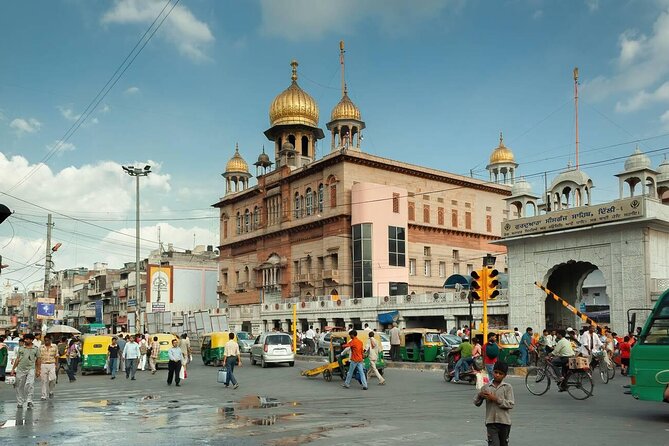
This is a half-day style tour built for first-timers who want two different Delhis in one go: the lanes of Old Delhi and the government-and-monuments New Delhi core. It runs about 6 hours, with hotel pickup and drop-off by private car, plus an English-speaking driver and a professional guide.
The private setup is also a big deal for comfort. Your group stays together, and you’re not squeezed into a giant herd with a dozen competing priorities. Reviews back up that guides slow down when needed and explain what you’re looking at, which turns “busy sights” into something you can actually follow.
You’ll also want to be ready for walking time. You’re moving through markets on foot, then switching to a rickshaw ride, and later stepping into historic complexes in New Delhi.
You can also read our reviews of more walking tours in New Delhi



Old Delhi heritage walk: markets, sensory stops, and Kinari Bazaar
Old Delhi starts with a guided walking experience that takes you into the kind of street blocks where you quickly learn the city isn’t one museum—it’s a working place. The tour focuses on what’s around you: markets, everyday commerce, and the rhythm of people moving through narrow lanes.
One reason this walk works well is that it’s not only about monuments. You get time to observe what locals buy, how stalls are arranged, and what the neighborhood feels like. If you enjoy street-level travel, this portion is where the day becomes memorable.
You also pass through Kinari Bazaar, known for wedding-related accessories and bright craft items. Expect shops with traditional wedding materials—fabrics, laces, decorative pieces, and jewelry items. Even if you do not shop, it’s a useful slice of cultural life, because you can see how the local economy connects to ceremonies and celebrations.
A practical consideration: markets mean crowds and noise. If you’re sensitive to loud streets, it helps to keep your pace steady and rely on your guide for direction rather than trying to self-navigate.
Chandni Chowk by traditional rickshaw: the easiest way to feel the neighborhood
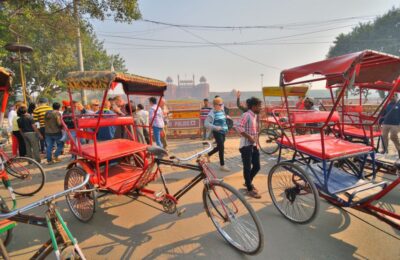
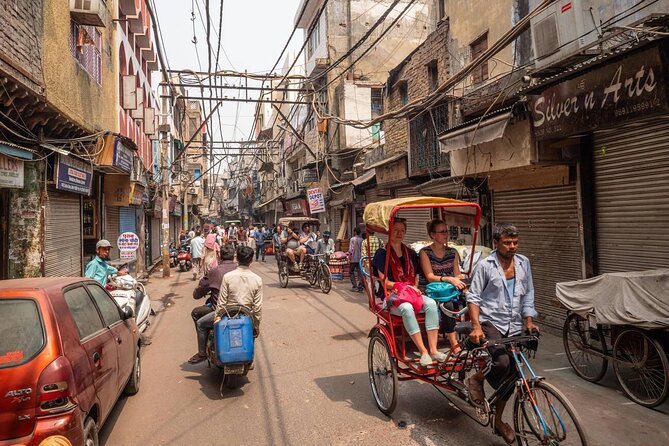
After the initial walking portion, you ride through Chandni Chowk by traditional rickshaw. This is one of the smartest parts of the tour because it gives you distance and perspective without requiring extra endurance.
Chandni Chowk’s power is that it’s visually layered. You’re not just watching one street view; you’re moving through a corridor of market stalls and historic commercial lanes. The guide’s role matters here: when you can connect what you see with a simple story, the ride feels less like transportation and more like orientation.
This rickshaw segment is also a nice contrast to the walking. On foot, you notice details up close. In the rickshaw, you get the bigger flow—where the market opens up, where it tightens, and how foot traffic patterns shape the street.
Jama Masjid: Mughal architecture you can actually take in
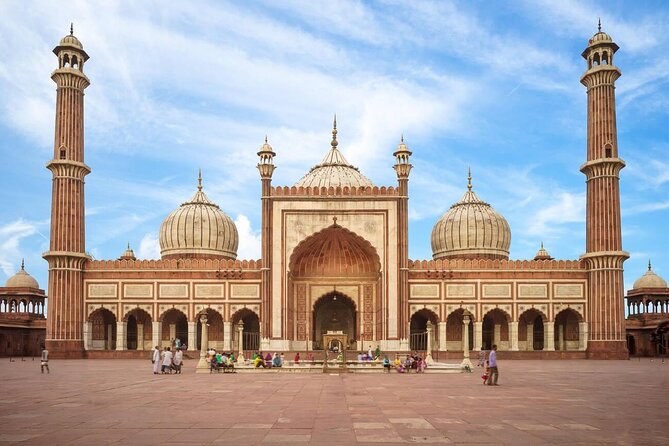
Jama Masjid is the big Old Delhi anchor on this itinerary. You visit one of the largest mosques in India, built by Emperor Shah Jahan, and you get time to look at its Mughal architecture up close.
What makes this stop click is the scale. A place built to hold thousands of worshippers changes how you perceive the space. You can look at the towering minarets and take in the courtyard layout, which feels designed for movement and gathering rather than individual sightseeing.
A guide’s explanations help here. In the feedback, strong guides were praised for sharing the stories behind what you’re seeing, and for taking time rather than rushing you through. That’s exactly what you want for a site like Jama Masjid, where details matter but can be overwhelming if you don’t have a framework.
Practical note: plan for a respectful approach to mosque spaces. Even when a tour guide sets the pace, dress modestly and follow instructions on where to walk and where to look.
The drive-past stops: Parliament House and Rashtrapati Bhavan context
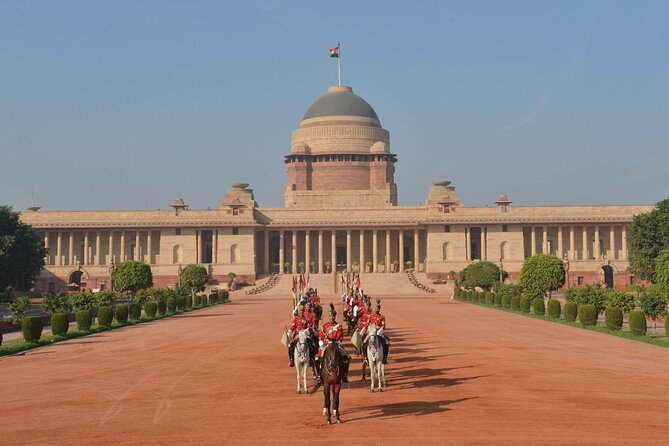
Between Old Delhi and the more formal New Delhi monuments, you get a simple connection by car: you drive past Parliament House and pass by the President’s House (Rashtrapati Bhavan).
This is not a long sightseeing detour, and that’s intentional. Delhi’s political and ceremonial core can be hard to read quickly from the outside, so seeing the buildings in context from the road gives you useful orientation before you step into monuments that people come to specifically for photos and history.
Think of these drive-past moments as the tour’s “setup chapter.” They help you understand why India Gate, Humayun’s Tomb, and Qutub Minar feel like part of a larger city story rather than a random set of stops.
You can also read our reviews of more historical tours in New Delhi



India Gate: a calm reset with a war memorial center
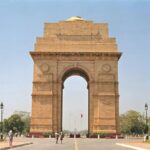
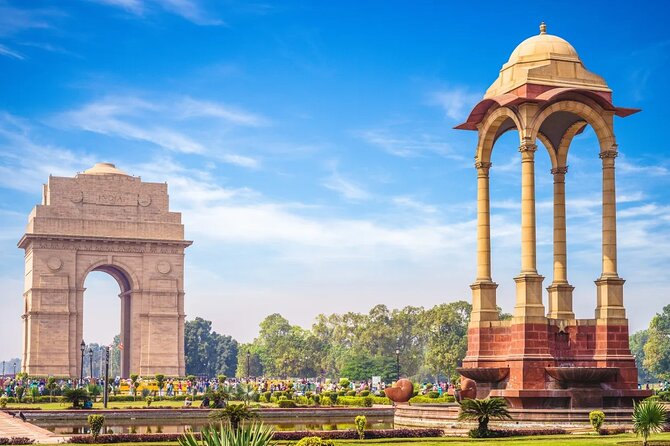
India Gate is next, and it’s a welcome change of pace. You visit this iconic war memorial dedicated to soldiers of the Indian Army, surrounded by gardens.
This stop works as a break in the day because it’s easier to slow down. After market lanes and mosque architecture, the open space at India Gate lets you reset your eyes and your legs. You can take in the monument from a bit of distance, then shift your attention to the garden surroundings that create a calmer rhythm for photos and strolling.
Time here is relatively short, so don’t try to over-schedule. Use the time to get oriented and snap a few clear photos from the main viewpoint your guide points out.
Humayun’s Tomb and Qutub Minar: UNESCO stops with separate admission
This tour includes two UNESCO World Heritage sites: Humayun’s Tomb and Qutub Minar. Both are on the itinerary for about 1 hour each, but there’s one key catch: entrance fees are not included.
- Humayun’s Tomb: entrance fee listed as $7.00 per person
- Qutub Minar: entrance fee listed as $7.00 per person
If you do both, you should plan for about $14 more per person on top of the tour price. That’s not a deal-breaker, but it’s important for budgeting so you don’t get surprised mid-day.
Humayun’s Tomb: Mughal architecture with a famous influence
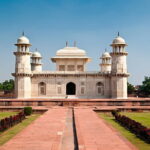
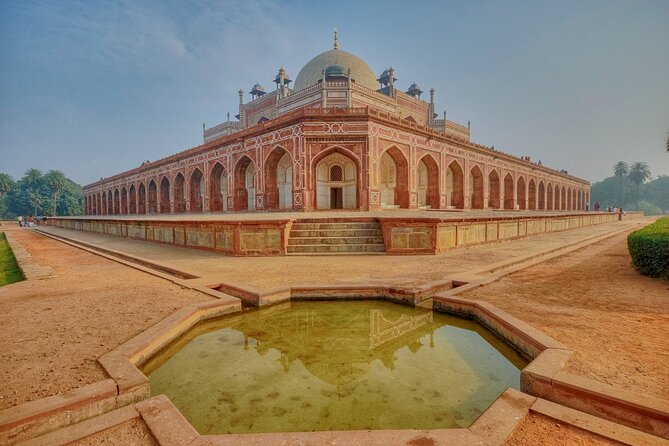
Humayun’s Tomb is described as an outstanding example of Mughal architecture, and it’s often considered the inspiration for the Taj Mahal. Even without getting too deep into scholarly detail, you’ll appreciate why this place is so often compared to later masterpieces: the design language, symmetry, and monument-first layout are strong.
Go in with a simple goal: look for the way the tomb complex organizes movement and sightlines. You’ll likely get more out of it if your guide points out key design features rather than letting you wander.
Qutub Minar: the world’s tallest brick minaret
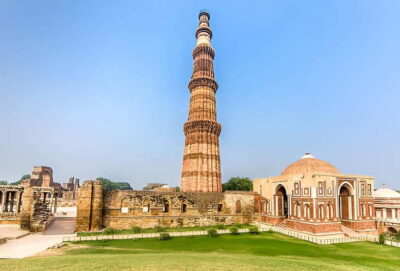
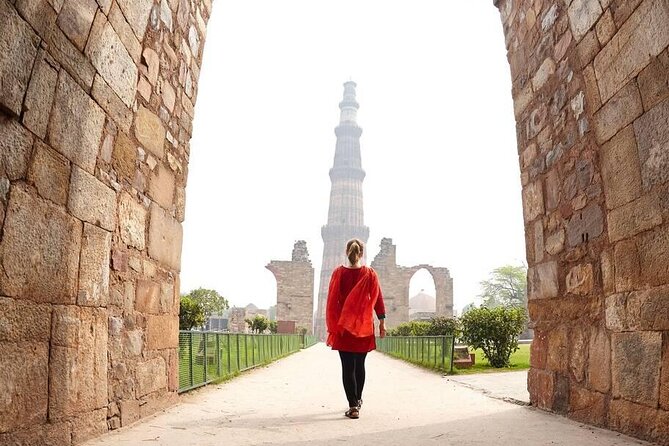
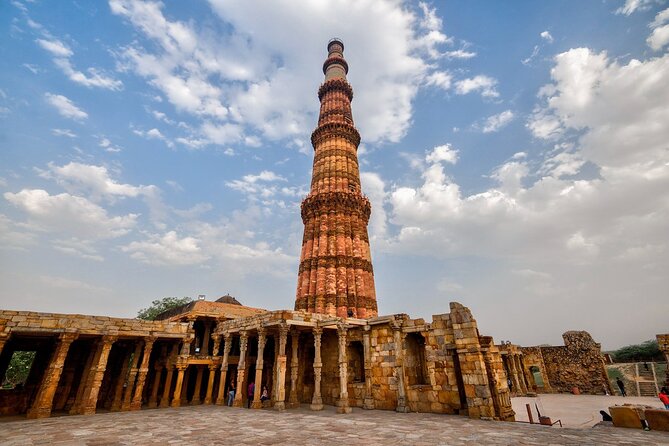
Qutub Minar gets you another UNESCO moment, and it’s unique for one very simple reason: it’s the world’s tallest brick minaret, from the 12th century. You’ll see Indo-Islamic architecture showcased through multiple layers of what the site includes.
This stop is also easier to enjoy if you like visual scale. Minarets change your sense of proportion. Even short walking segments can feel longer because you’re constantly re-orienting your gaze upward.
Guides that make the city readable: Sourabh and Shiv as examples
The biggest variable in any Delhi tour is the guide, and this one tends to do well there. In the feedback I reviewed, guides like Sourabh and Shiv come up as standout picks for English-language clarity and for showing you areas you might not choose on your own.
I take that seriously, because Delhi can feel like information overload. Your guide is what turns the day into a connected story. With the right guide, the walking routes and the quick transitions by car and rickshaw feel purposeful, not random.
Also, good guides don’t just recite facts. They guide your attention. They help you notice why a market looks the way it does, why a monument was built where it was, and how to move through a site without getting stuck in bottlenecks.
Price and value: what you’re paying for (and what costs extra)
The tour price is $19.27 per person, and it includes a lot of real logistics value. You get hotel pickup and drop-off, bottled water, a professional guide, and a rickshaw ride through Chandni Chowk. Fuel charges, parking, and taxes are covered too.
What’s not included is the main add-on cost: entrance fees for Humayun’s Tomb and Qutub Minar (each listed at $7.00). Meals are also not included, so any food beyond what you might snack on during the day would be personal spending.
So what’s the honest value math? If you pay entrance at both UNESCO sites, your day is roughly $33.27 per person total (tour + $14 in listed fees). For a half-day that covers Old Delhi, Chandni Chowk, Jama Masjid, India Gate, plus two UNESCO monuments, that still reads as solid value—especially because transport is handled and you’re not spending extra time figuring out how to connect neighborhoods.
One more note: the price includes group discounts and a mobile ticket. That usually means less hassle at check-in and better affordability if you’re traveling as a small group.
Practical tips so your day feels easy, not exhausting
Delhi days can run long, even when the tour is only half a day. Here’s how to keep it comfortable without overthinking it.
- Wear comfortable shoes. You’ll do walking in Old Delhi and step around historic complexes later.
- Bring a light layer. Old Delhi streets and mosque areas can feel different temperature-wise than open gardens at India Gate.
- Plan for separate spending at UNESCO sites. Entrance fees for Humayun’s Tomb and Qutub Minar are not included.
- If your guide recommends street food, remember meals are not part of the package. Budget for personal choices rather than assuming everything is included.
- Have patience with transitions. The day switches between walking, rickshaw, and car rides, so keep your schedule flexible and follow your guide’s timing cues.
If you do those things, the tour stops feeling like a checklist and starts feeling like a coherent overview of how Delhi works.
Should you book this Old Delhi Heritage Walk + New Delhi sights tour?
I think this tour is a smart pick if you’re short on time and want a real mix: Old Delhi street scenes plus major New Delhi monuments, with transport handled and a guide to keep everything understandable. It’s also a good fit if you want a traditional rickshaw moment in Chandni Chowk and you value time-saving car drives to political landmarks.
Skip it, or at least reconsider, if you hate walking or if you’re very budget-tight. The extra $14 in UNESCO entrance fees (Humayun’s Tomb and Qutub Minar) is the main cost that can change your final math, and the day moves fast.
If you want the easiest way to get your bearings in Delhi and still see headline sights, this one delivers.
FAQ
How long is the Old Delhi Heritage Walk and Half Day New Delhi Sightseeing tour?
It’s approximately 6 hours.
Do I get hotel pickup and drop-off?
Yes. The tour includes hotel pickup and drop-off by private car with an English-speaking driver.
Is there a rickshaw ride on the tour?
Yes. You’ll take a traditional rickshaw ride through Chandni Chowk.
Which major sights are included in the itinerary?
You’ll cover Old Delhi on a guided heritage walk, Chandni Chowk, Kinari Bazaar, Jama Masjid, then New Delhi stops including India Gate, Humayun’s Tomb, and Qutub Minar. You’ll also drive past Parliament House and pass by the President’s House.
Are meals included?
No. Meals are not included.
Are entrance fees included for Humayun’s Tomb and Qutub Minar?
No. Entrance fees are listed separately: Humayun’s Tomb $7.00 per person and Qutub Minar $7.00 per person.
What is included in the tour price besides the sightseeing?
Included items are bottled water, a professional tour guide, and coverage for fuel, parking, and taxes.
Is this tour private or shared?
This is described as a private tour/activity, meaning only your group participates.
Can I cancel for free?
Yes. Free cancellation is available if you cancel up to 24 hours in advance for a full refund. If you cancel less than 24 hours before the start time, the amount paid is not refunded.